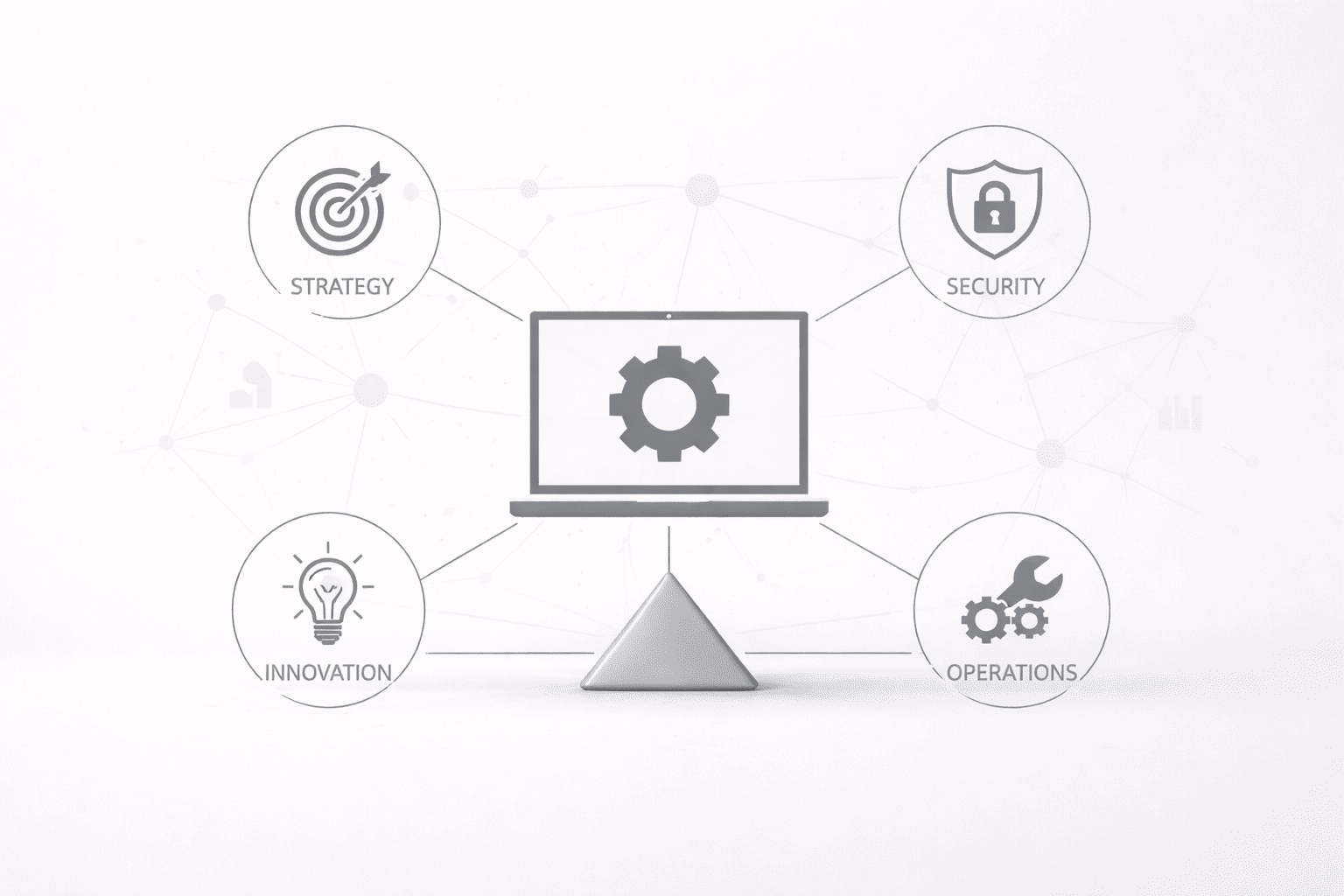
For years, organizations treated IT as a support function — necessary, expensive, and largely reactive. That model no longer works. Today, technology determines how fast you innovate, how well you manage risk, how efficiently you operate, and how confidently regulators and customers trust you.
IT is no longer infrastructure in the background. It is strategic infrastructure.
The difference between organizations that grow sustainably and those that struggle is not how much they spend on technology. It is how intentionally they govern, prioritize, and operationalize it.
Modern IT leadership is not about uptime alone. Availability is expected. What differentiates high-performing organizations is how well IT aligns with business objectives, translates strategy into executable roadmaps, and measures value — not just activity. Many organizations still track tickets closed and servers patched, while executive leadership wants to understand revenue enablement, risk exposure, and digital capability maturity. The gap between those two conversations is where most IT credibility is lost.
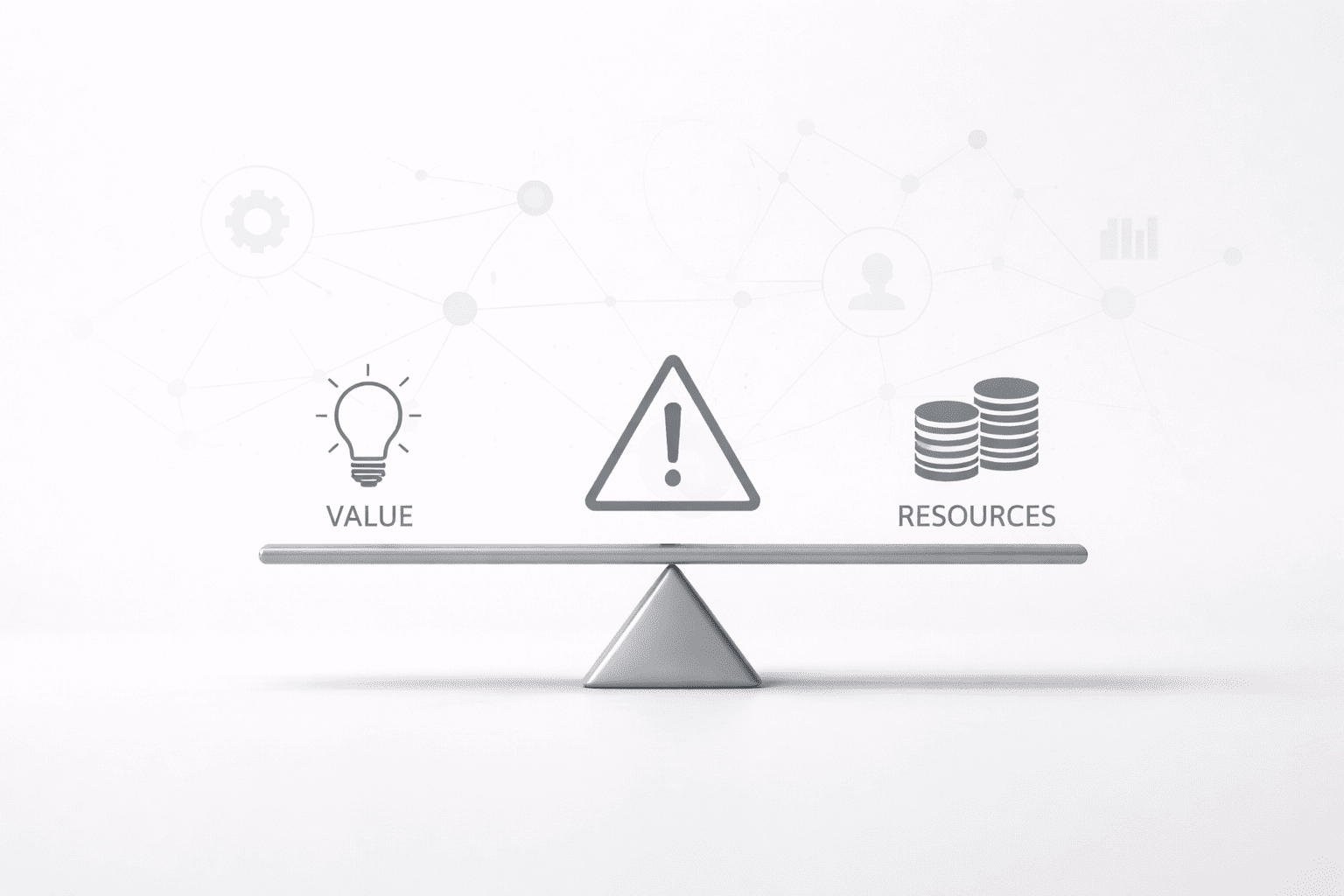
A mature IT function begins with clarity of purpose. Every major investment must answer three questions: What value does this create? What risk does this introduce? What capability does this strengthen? If those questions cannot be answered clearly, the organization is not governing technology — it is accumulating it.
Another critical shift in modern IT is decision architecture. In weak environments, decisions are informal, escalated late, and influenced by urgency rather than priority. In strong environments, decision rights are explicit, approval thresholds are defined, and trade-offs are transparent. This does not slow execution — it accelerates it by eliminating ambiguity. Fast organizations are not chaotic; they are structured.
Cybersecurity and resilience further reinforce why IT must be treated strategically. Security is no longer a technical layer — it is a business survival discipline. Operational resilience, disaster recovery, vendor risk management, and data governance must be integrated into the enterprise risk model. When security decisions are made in isolation from executive strategy, risk becomes misaligned with appetite.
Digital transformation adds another layer of complexity. Cloud adoption, automation, AI integration, and API ecosystems require architectural discipline. Without strong architecture governance, organizations create technical debt at scale. Innovation without structure produces fragility. Sustainable innovation requires architecture standards, lifecycle governance, and measurable performance indicators.
The most overlooked element of strategic IT is accountability. High-performing organizations define ownership across portfolios, services, data assets, and risk domains. When accountability is clear, performance improves naturally. When accountability is diffused, even talented teams underperform.
Metrics are equally important. Mature IT organizations measure:
- Value realization from major initiatives
- Service performance linked to business impact
- Risk exposure and mitigation effectiveness
- Capability maturity over time
They avoid vanity metrics. Instead, they focus on indicators that influence executive decisions.
Vendor ecosystems must also be governed deliberately. Modern enterprises rely heavily on third-party providers, cloud platforms, and SaaS vendors. Without structured vendor governance, organizations outsource responsibility but retain liability. Strategic IT requires oversight mechanisms, performance monitoring, and contractual clarity that align with enterprise risk posture.
Leadership mindset is the final differentiator. The CIO of today is not merely a technology expert. The role demands financial literacy, risk intelligence, regulatory awareness, architectural insight, and change leadership capability. IT leaders must translate complexity into strategic clarity for boards and executive committees.
When IT is treated as strategic infrastructure, several outcomes become visible:
Investment portfolios become rational and aligned.
Risk is discussed openly rather than discovered in audits.
Transformation initiatives are sequenced logically.
Technology debt is managed intentionally instead of inherited silently.
Business and IT operate as partners rather than requestor and provider.
This is not about bureaucracy. It is about disciplined enablement.
Organizations that treat IT as an operational utility eventually fall behind. Organizations that treat IT as strategic infrastructure build resilience, agility, and long-term competitiveness.
The future will not be defined by who adopts technology first. It will be defined by who governs it best.